Should You Buy a House Now or Wait? (The Real Truth from an Arizona Broker)
If I had a dollar for every time someone asked me, "Jared, should I buy a house now, or should I wait?" I’d probably have enough to pay off a few mortgages myself!It’s a tough question, and the honest answer is: there is no single right answer.Because everyone's personal situation, budget, and desired neighborhood are completely different, there are simply too many variables to give a blanket "yes" or "no." However, as we look at how the market actually works, we can find some solid guidance to help you make the best decision for you and your family.Let’s break down the reality of trying to time the market, how interest rates actually behave, and why your lifestyle—not the economy—should be the real driver of your next move.
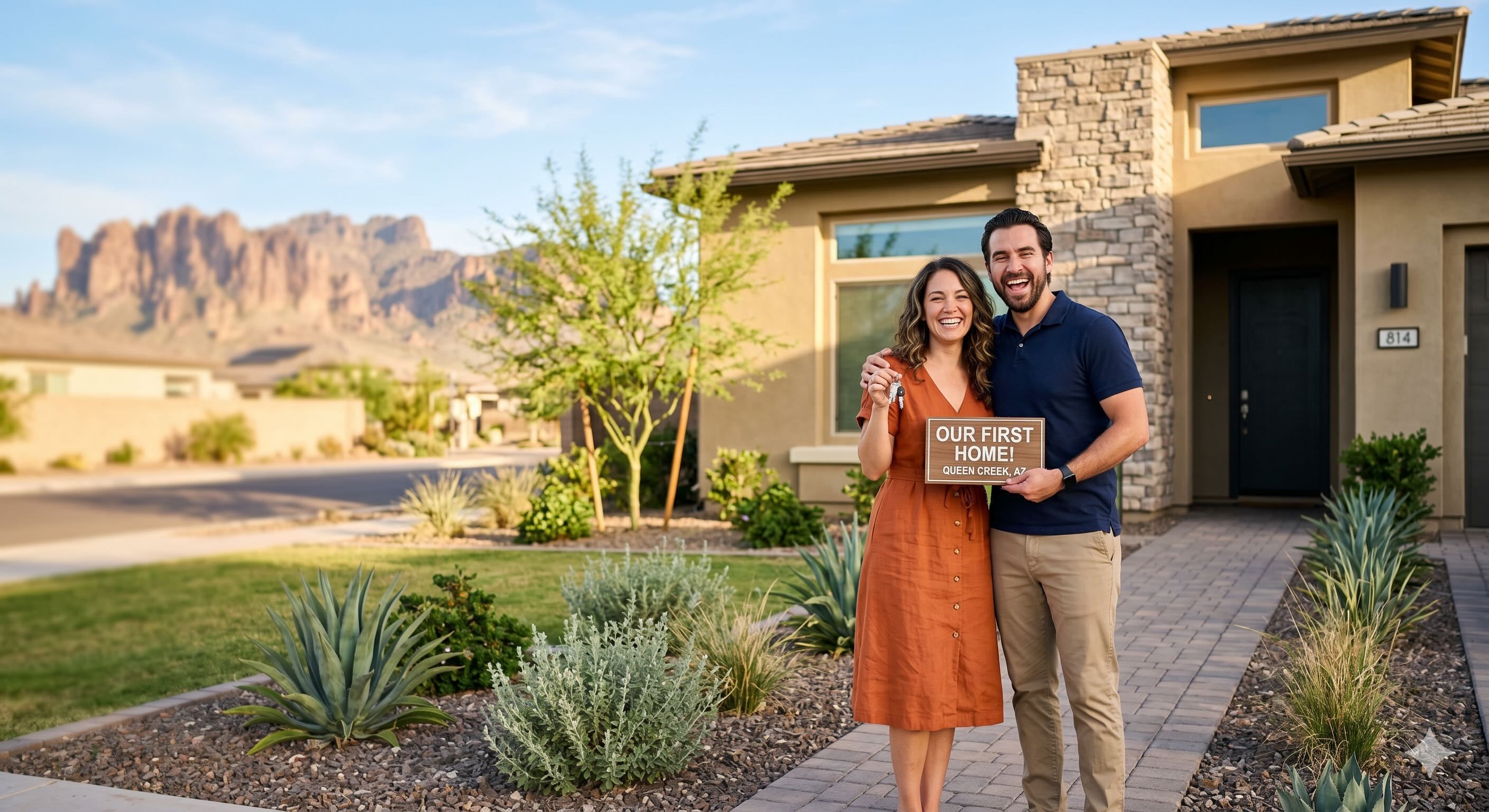
If I had a dollar for every time someone asked me, "Jared, should I buy a house now, or should I wait?" I’d probably have enough to pay off a few mortgages myself!
It’s a tough question, and the honest answer is: there is no single right answer.
Because everyone's personal situation, budget, and desired neighborhood are completely different, there are simply too many variables to give a blanket "yes" or "no." However, as we look at how the market actually works, we can find some solid guidance to help you make the best decision for you and your family.
Let’s break down the reality of trying to time the market, how interest rates actually behave, and why your lifestyle—not the economy—should be the real driver of your next move.
The Myth of "Timing the Market"
We’ve all had that dream of selling perfectly at the absolute peak and buying back in at the absolute rock bottom. I’ve had clients try to time it before, and let me tell you: it rarely works out.
Usually, they wait for prices to drop, but the bottom never comes, and values just keep climbing. If anyone actually had a crystal ball to time the real estate or stock markets perfectly, we’d have a lot more wealthy people walking around.
Think back to the years leading up to the major housing crash. Everyone thought the good times would never end, and then boom—the market shifted fast and hard. Real estate fluctuates. It comes down to basic high school economics:
When everyone is buying: Home values go up.
When everyone is selling: Home values go down.
Because we can’t predict the future cost of a box of cereal several years from now, trying to predict the exact month home prices will dip is a losing game.
Rates vs. Home Values: Two Different Trains on Two Different Tracks
A common misconception is that interest rates and home values always move in the exact same direction. In reality, they are like two different trains running on completely separate tracks.
Sometimes home values rise while rates fall; other times, both climb together.
Home Values: Driven by local supply, demand, population growth, and inflation. They trend upward over the long term, especially in high-demand markets.
Interest Rates: Driven by the overall bond market, economic indicators, inflation, and global events. They fluctuate constantly based on market volatility.
The Local Factor
Location changes everything. Here in the Phoenix, Arizona market—specifically places like Queen Creek, Mesa, Gilbert, and Chandler—we have a massive influx of people and businesses. That strong demand keeps pushing our home values up. A friend of mine in the Midwest might see their home value rise much more slowly because the local demand isn't as intense.
The Danger of "Float and Hope" with Interest Rates
It used to be easier to spot interest rate trends. If they were heading down, we could "float" your rate (meaning we wouldn't lock it in right away) to see if we could catch a lower number before closing. If they were climbing, we locked immediately.
Anymore, with so much global uncertainty—from stock market volatility to geopolitical events impacting oil—rates are shifting rapidly day by day.
Because of this volatility, I lock in the interest rate for the vast majority of my clients the moment we start their loan. Nobody wants to play the guessing game and get caught off guard if rates suddenly spike overnight.
Don't Let Interest Rates Dictate Your Life
If you need to move, you need to move. Making a major life decision strictly based on interest rates can put your life on hold for the wrong reasons. Ask yourself:
Is your family growing and you desperately need an extra bedroom?
Are you working from home now and need a dedicated office space with a door you can actually shut to drown out the noise?
Do you need a guest house because your parents are moving in, or the kids are getting older?
Are you dreaming of a backyard swimming pool to beat the Arizona heat, but don't want to deal with the massive expense of building one from scratch?
If a lifestyle change is going to bring you convenience, peace of mind, and happiness, that is worth far more than waiting for a marginal drop in rates.
Remember: You Can Always "Marry the House and Date the Rate"
If you buy a home today, you aren't stuck with that interest rate forever. If rates drop down the road, you can refinance.
A Quick Truth Bomb on Refinancing: Refinances are never completely "free"—anyone telling you otherwise is rolling those costs elsewhere. However, there are highly creative ways to structure a refinance (like rolling closing costs into the loan or the rate) so you don't pay anything out of pocket.
Also, you do not have to refinance with the company that currently services your mortgage (the name on your monthly statement). Any licensed loan officer can refinance your loan. In fact, independent brokers like myself can often shop around and find you a much cheaper deal than your current servicer will offer.
What's Your Next Move?
At the end of the day, the right time to buy is when it makes sense for your family, your finances, and your lifestyle.
If you want to stop guessing and actually look at the real numbers for your specific scenario, let’s chat. We’ll run through the math together so you can make an educated, confident decision.
I’m Jared Halbert, mortgage broker here in Queen Creek, Arizona. I service the entire state of Arizona. Give me a call, and let's get to work!